
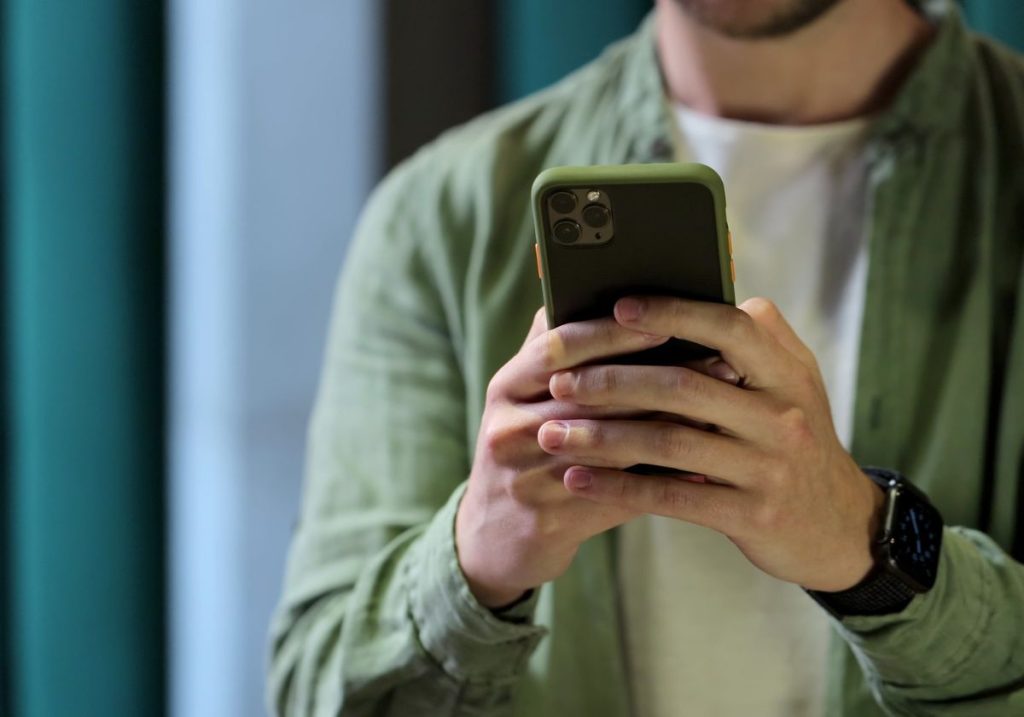
There’s no shortage of messaging right now about how bad phones are for us, from wrecking our attention spans to disturbing our sleep and affecting our relationships. And there’s definitely some truth in that. But your phone itself usually isn’t the problem. It’s the default settings and habits running on autopilot in the background of your day.
The good news is that a few small phone habits can make a real difference for your mental health, without giving up the phone altogether.
Disclaimer: The information shared within this article is not a replacement for professional help. If you, or someone you know, is in a crisis, please reach out to one of the 24/7 helplines listed below:
– Suicide Call Back Service: 1300 659 467
– Lifeline: 13 11 14
– Open Arms: 1800 011 046
Six Phone Habits For Mental Health
None of these requires a full digital detox — just a few small adjustments to how your phone is already set up.
1. Start with one small habit: switch to greyscale
Most phones let you switch the whole screen to greyscale in a couple of taps (it’s usually buried in accessibility settings, but easy to find with a quick search for your device). Colour is part of what makes apps engaging — reds and blues are designed to grab attention and keep you scrolling. Turning them off doesn’t change what’s on your phone, just how much your brain wants to keep looking at it. It’s a two-minute change a lot of people notice within a day or two.
2. Use the screen time tools already built in
Did you know you don’t need another app to manage your phone use? iPhone’s Screen Time and Android’s Digital Wellbeing are already sitting in your settings. Both can set daily limits on specific apps, schedule downtime, or simply show you where your time is actually going. Most people are surprised by the numbers the first time they check.
3. Turn on movement and breathing reminders
Most phones and smartwatches can be set to nudge you to stand, stretch, or take a few slow breaths at set points in the day. It sounds small, but a short prompt to reset (even just three slow breaths) can interrupt a stress spiral before it builds momentum.
4. Cut notifications back to what matters
Every notification in your day is a small interruption, and most of them aren’t urgent. Go through your settings and turn off notifications for anything that isn’t a real person trying to reach you (no app badges, no promotional pings) to cut down on a surprising amount of background noise in your day.
5. Set a wind-down window before bed
Both iPhone and Android let you schedule a Do Not Disturb or wind-down period that dims the screen, mutes notifications, and can even switch your home screen to something less stimulating as you head to bed. Setting it once means you’re not relying on willpower every night to put the phone down.
6. Let your phone help you sleep, not scroll
Instead of scrolling to switch off, some people find it easier to swap in something designed for winding down like sleep stories, white noise, or a guided body scan. Guided mindfulness apps are built around exactly this, with sleep stories, white noise and guided body scans. A guided mindfulness app is one of the tools your practitioner may recommend as part of the Veteran Mindfulness Program. But you don’t need to be in a program to try something like it tonight.
Final Thoughts
None of this requires throwing your phone in a drawer or going cold turkey on technology. Good phone habits for mental health are usually about small, deliberate adjustments (not a full digital detox). And they can shift your phone from something that runs your attention to something that actually works for you.
Our Veteran Mindfulness Program combines 1:1 sessions with a qualified mental health professional, as clinically required, with practical tools to use between sessions. Depending on your needs and your practitioner’s recommendations, this may include a guided mindfulness app with sleep stories and guided audio. Available to eligible DVA clients. Check your eligibility with DVA or reach out to our team for help.
Click here to find out more about the VMA program.
A Note on DVA Eligibility
1:1 sessions with a qualified mental health professional may be covered under DVA arrangements for eligible DVA clients. Eligibility varies depending on your individual circumstances. Program tools are provided by Veteran Mindfulness Australia where clinically appropriate, as recommended by your practitioner, and are not funded by DVA. Depending on your needs, these may include access to the Calm app and items such as headphones for audio-based mindfulness exercises or a sleep mask to support your sleep routine. Check your eligibility with DVA or reach out to our team for help.
Disclaimer
This content provides general information only and is not a substitute for professional advice. Eligibility for DVA-funded mental health support varies depending on your individual circumstances. Check your eligibility with DVA or reach out to our team for help. If you are experiencing a mental health crisis, please contact Open Arms on 1800 011 046 or Lifeline on 13 11 14.